How MISUP brings European professionals together to learn, exchange and take empowerment back to their local communities
Netwerkpro, The Netherlands
Strong communities need strong organisations
Across Europe, local migrant-support organisations play an essential role in helping people find their way in a new society. They are often close to the communities they serve and understand the realities people face in their daily lives.
Much of the attention in social programmes understandably focuses on the people who need support. But strong communities also need strong organisations and skilled professionals. Local organisations do not always have the time, resources or opportunities to invest in the professional development of their staff, trainers and community workers.
This is one of the ideas at the heart of MISUP – Strengthening Migrant Supporting Communities: if we strengthen the people and organisations supporting migrant communities, their knowledge and impact can reach many more people over time.
From a methodology to local capacity
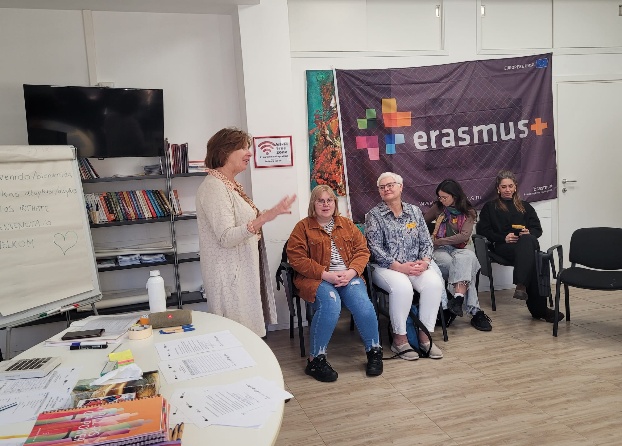
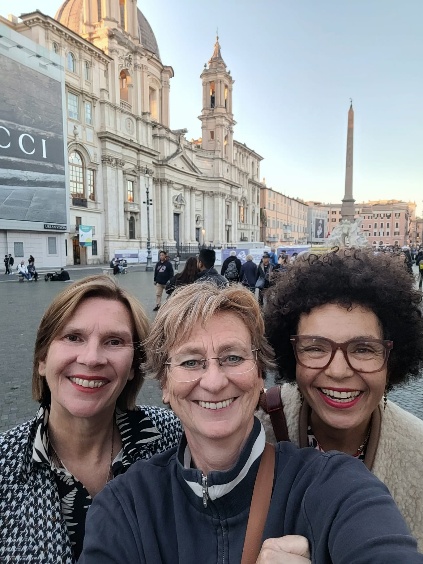
In November 2025, 13 professionals from five European countries came together in Rome for the MISUP Train-the-Trainer programme, hosted by Programma Integra.
The training focused on Pillars of Power, an empowerment methodology used by Netwerkpro in the Netherlands and adapted within MISUP so that migrant-support organisations across Europe can work with it in their own communities. The aim was not simply to introduce a set of exercises or hand over a training manual. Participants were being prepared to facilitate the methodology themselves after returning home.
For Netwerkpro, this Train-the-Trainer approach is an important way of increasing impact. Rather than one organisation continuing to deliver the same programme itself, knowledge is transferred to professionals who already have trusted relationships within their local communities. They can adapt what they have learned to their own context and, in turn, reach new groups of people.
In this way, European cooperation becomes very practical: knowledge does not stay within a project or one organisation, but travels.
Learning to train starts with ‘being there’
The Rome programme was led by Netwerkpro trainers Muriel Dalmulder and Liekje Welten. A central theme was deceptively simple: being present.
Working with people who may have experienced migration, uncertainty or social exclusion requires more than knowing the content of a training programme. A trainer needs to create a safe environment, understand group dynamics, recognise what is happening in a group and know when to lead, listen or make space.
During the training, participants therefore worked on personal presence and self-awareness, group dynamics, energy management, leadership and creating a safe group climate. Music, movement, practical exercises and reflection were used throughout the programme.
The trainers were not being asked simply to understand Pillars of Power. They were learning how to carry it themselves.
Europe as a learning space
But the value of meeting in Rome went beyond the formal training programme.
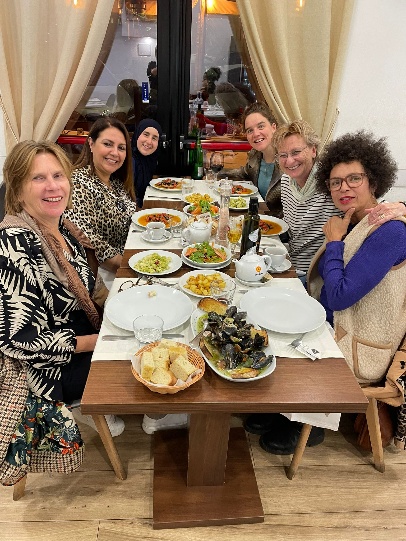
Bringing professionals from different European countries into one room created space to compare realities. How do migrant-support organisations work in Italy, the Netherlands, Greece, Lithuania or Spain? What challenges do professionals encounter locally? What works in one country that might inspire another? And which challenges turn out to be surprisingly similar?
These conversations are an important part of European cooperation.
International projects can sometimes be seen mainly in terms of developing new materials or organising activities. MISUP also sees them as an opportunity to build relationships between professionals. Meeting European peers, sharing experiences and discussing difficulties openly helps organisations look at their own practice differently.
A solution developed in one local community may spark an idea in another. A challenge that feels very specific to one organisation may turn out to be shared by colleagues hundreds of kilometres away.
That is where international cooperation becomes meaningful: not simply working alongside each other, but learning from each other.
Investing in the organisations closest to communities
MISUP focuses deliberately on strengthening migrant-support organisations themselves.
Community organisations often have strong relationships with the people they work with. Their staff understand their neighbourhoods, languages, cultures and local networks. Yet opportunities for professional development, international exchange and organisational capacity building can be limited.
MISUP therefore works on two connected levels. Through Pillars of Support, leaders and organisations strengthen their capacity to support their communities. Through Pillars of Power, trainers learn how to facilitate empowerment programmes directly with migrants and other people in vulnerable situations.
The ambition is to create a multiplier effect: strengthen an organisation, equip its professionals, and they can continue using and sharing that knowledge long after an individual training or European project has ended.
Taking the learning home
The Rome training was therefore never intended to end in Rome.
Participants returned to their countries with the methodology, handbooks and practical tools, but also with the responsibility to put their learning into practice.
In the Netherlands, for example, trained professionals subsequently used Pillars of Power with women from different cultural backgrounds in Amsterdam. Similar local implementation has taken place across the MISUP partner countries.
That movement – from European exchange to stronger professionals, from professionals to local organisations, and from those organisations to their communities – is central to the MISUP approach.
For Netwerkpro, it is also why Train-the-Trainer programmes matter. Impact is not only about how many people one organisation can reach itself. It is also about sharing knowledge, strengthening others and creating the conditions for good practice to continue and grow.
The two days in Rome were intensive. But perhaps the most important outcome was simple: professionals from across Europe left not only with new knowledge, but with new peers, new perspectives and greater confidence to bring empowerment into their own communities.